
 It occurred to me several months ago as I was traveling with my family back home from a visit with our extended family in Southern Illinois. We were crossing the Mississippi river at a bridge in Cairo, Il. It’s a bridge and river I’ve crossed probably over a hundred times in my lifetime w/out too much thought. I guess for a short period in my marriage there was an ongoing conversation, argument really, on what would happen if a person were to jump off the bridge when they hit the water. My wife’s theory was because the water was moving so fast, it would be like hitting concrete and I contended if a person were to point their toes well enough to pierce the water upon impact they would be fine. For whatever reason, this conversation persisted for several years but has finally faded – maybe because I’m doubting my position on this one a little. However, on this trip back from Illinois, I kind of had Lewis and Clark on my mind and was discussing with my son the Louisiana purchase – 15 million dollars for about 828,000 square miles. And then we got into this conversation about how big a difference bridges make in peoples lives. They are shortcuts and usually pretty significant ones that have impacted and continue to impact our lives in some pretty profound ways. Take for instance this bridge in Cairo, IL. Southern Illinois and especially Cairo has been a part of Illinois that has experienced dramatic economic decline in the last 90+ years. In the 1920s, Cairo’s population grew to over 15,000 people in establishing itself as a hub for railroad shipping and ferrying of goods (and later automobiles) across the river providing lots of employment opportunities. However, today Cairo’s population is just under 3000 residents, of which many struggle with poverty and finding adequate employment. This decline in population and economy can be traced back to 2 bridges. The first was of minor impact, constructed in 1889 by the Illinois Central Railroad crossing the Ohio river.
 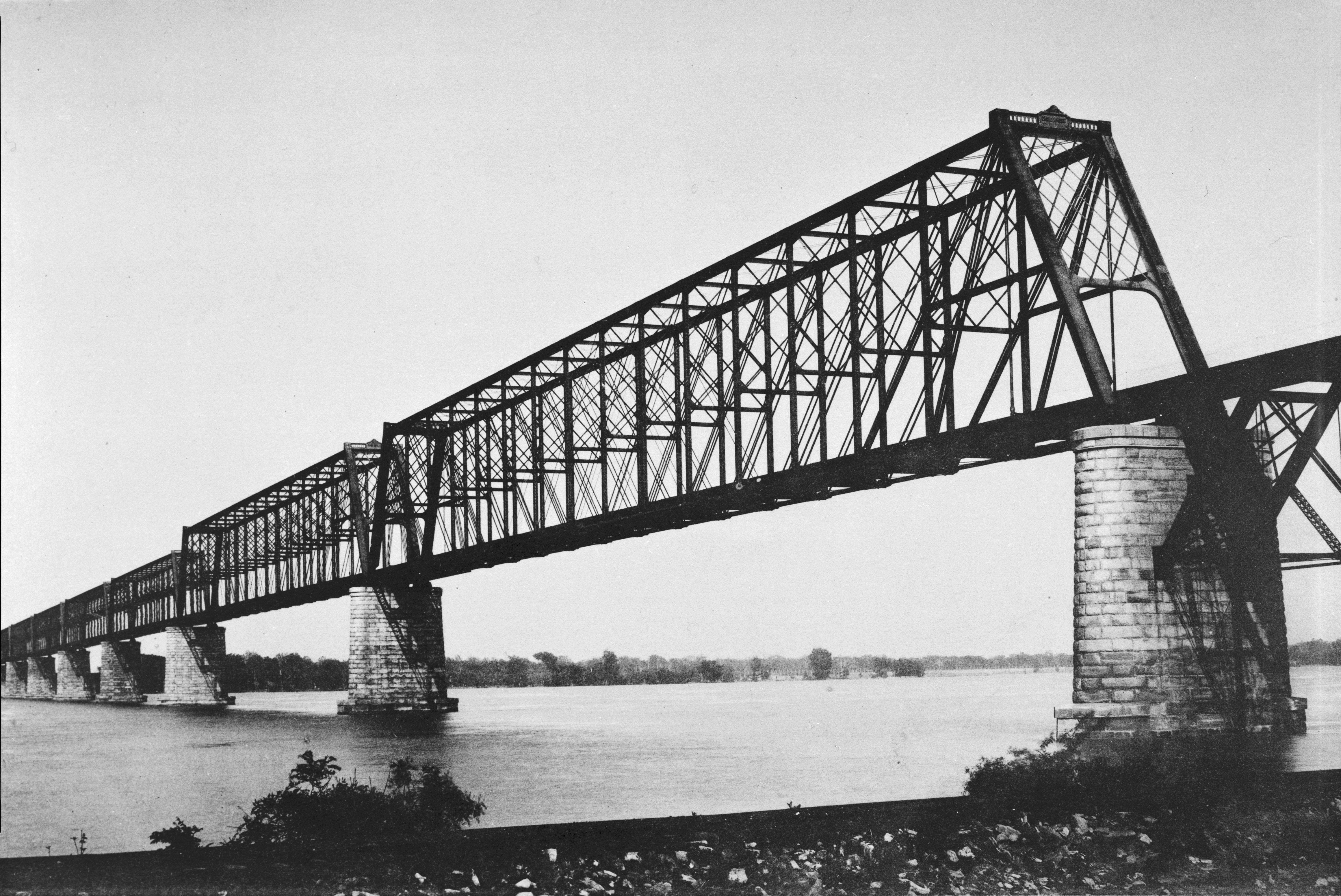 This brought about a minor decline in railroad ferried goods at Cairo but an increase in the use of automobiles did well to offset this decline. The second bridge built in 1905 in Thebes, Ill is what really started the economic deconstruction of Cairo eventually rendering the need for ferried freight and automobiles unnecessary.
I am a technologist at heart and profession. It’s my career and passion to find ways to use technology to make things work better (and many times this means faster). But thinking about these bridges, at least for me as I cross the river and think of Cairo, kind of begs the question, “what is better?”. The “bridge” certainly got things done faster. In regards to cost and productivity, goods were distributed more efficiently and at lower costs. And I’m sure this meant that some people were able to pay a little less for some stuff and that some people were able to make a little more selling stuff. And maybe in a total community net sum analysis kind of way, more people gained than lost…but do we know? How would we know?
As a technologist who builds and appreciates innovation. I find myself conflicted with this question of what type of “bridges” we need to be building in our society. In it’s most basic form, a bridge is a time reduction mechanism. It shortens the path so someone can get somewhere (or do something) faster. We have experienced several innovative bridges in our countries history. Railways transported goods and gave velocity to expansion of territories and establishing new communities. The telegraph connected people across the continent (and oceans), cutting communication time from months to moments and later would come the telephone and then the internet which would revolutionize trade and communication on a global scale making our world a much smaller place. Industry, paved roads and automobiles improved mobility and expanded product availability both in terms of price and geography not to mention changing the landscape of how Americans funded their consumption of goods by moving many workers from privately owned family based livelihoods like farming or consumer goods based storefronts to highly repetitive factory based jobs during the industrial age. And then the wheels of innovation turn again and not only can we communicate audibly in moments but we can see visually what is happening in the world around us. In a new technological era, good information is no longer in demand as much as it is crowded out by thousands of commercial voices fighting to be heard and bought. Internet search engines now track your inquiries to determine what type of ads to market on your next search. The mechanisms (i.e. the internet) for acquiring an item have never been quicker being reduced to a series of clicks and few keystrokes that can be done in your underwear sitting on your living room couch. And producers have never worked harder or more creatively, tapping into the impulses of human behavior in order to pursue the monies in exchange for the consumption of their goods.
I wonder if somewhere along the way, the purpose of the bridges have changed? They still are providing innovation but at what cost for the benefit? And who really benefits and for how long? These are hard questions that deal with the recipe of human behavior mixed with our countries (and our world’s) capitalistic economic model.
Maybe some more breakdown and thoughts on this later, or maybe not…I may just return to debating with my wife what happens when jumping off the bridge? Or maybe there are a few bridges we will just avoid – making the trip longer but the time better.
 Life in the Trench